
César Manrique's Lanzarote
The island's darling artist and nature activist

I have to admit that this was one of those trips that while it had been booked for months I waited until the last moments to do any research. Normally I would’ve buried myself in it as soon as flights and accommodations were nailed down but for whatever reason I procrastinated. I mention this only because when you google Lanzarote one of the first things to pop up is César Manrique so of course I knew of the beloved artist and sculptor but I didn’t know just how influential or prolific his work was on the island. In retrospect I am actually quite glad that I didn’t over-research because when I experienced the spaces Manrique created firsthand I was FLOOOOOORED! And not just because he was a genius; that is obvious upon entering any of the houses and event spaces he designed; but because his marriage of chic (now) retro furnishings and textiles with the natural landscape created by hundreds of volcanic eruptions, some from over 21,000 years ago, created a unique symbiosis.


To speak of César Manrique and not in context of the formation of Lanzarote would be doing his memory an injustice. This well-known Canary island floats a mere 60 miles off the coast of Western Africa making it temperate year round and much more tropical than mainland Spain. It is affectionately called the “island of 1000 volcanoes” and while that number isn’t exactly accurate it is true that you can’t turn in any direction except towards the ocean and not see one. The Mars-like landscape and expanse of lava fields make for striking contrast with the traditional, boxy, white pueblo houses and deep blue, turbulent Atlantic coastline. The volcanic soil is nutrient dense so while the land may look like scorched earth at first glance it is actually quite famous for growing grapes (and making delicious wines!) as well as potatoes, tropical fruits, corn, tomatoes, cacti and even moss. One wouldn’t have to ponder too long to get why Manrique was inspired by the island’s palette of colors or geological formations nor why he would make it his life’s work to protect this special place.


Manrique was born in 1919 on the island and at an early age showed a propensity for painting and drawing, admiring famous artists of the time like Picasso and Matisse. After serving in the Spanish Civil War he would move to Madrid to study art and graduate from La Escuela de Belles Artes de San Fernando followed by a move to New York in 1964. He expanded his artistic skills in the US while learning about pop art, American abstract expressionism and kinetic art, the latter of which is quite prevalent on Lanzarote - pay attention to roundabouts ;)
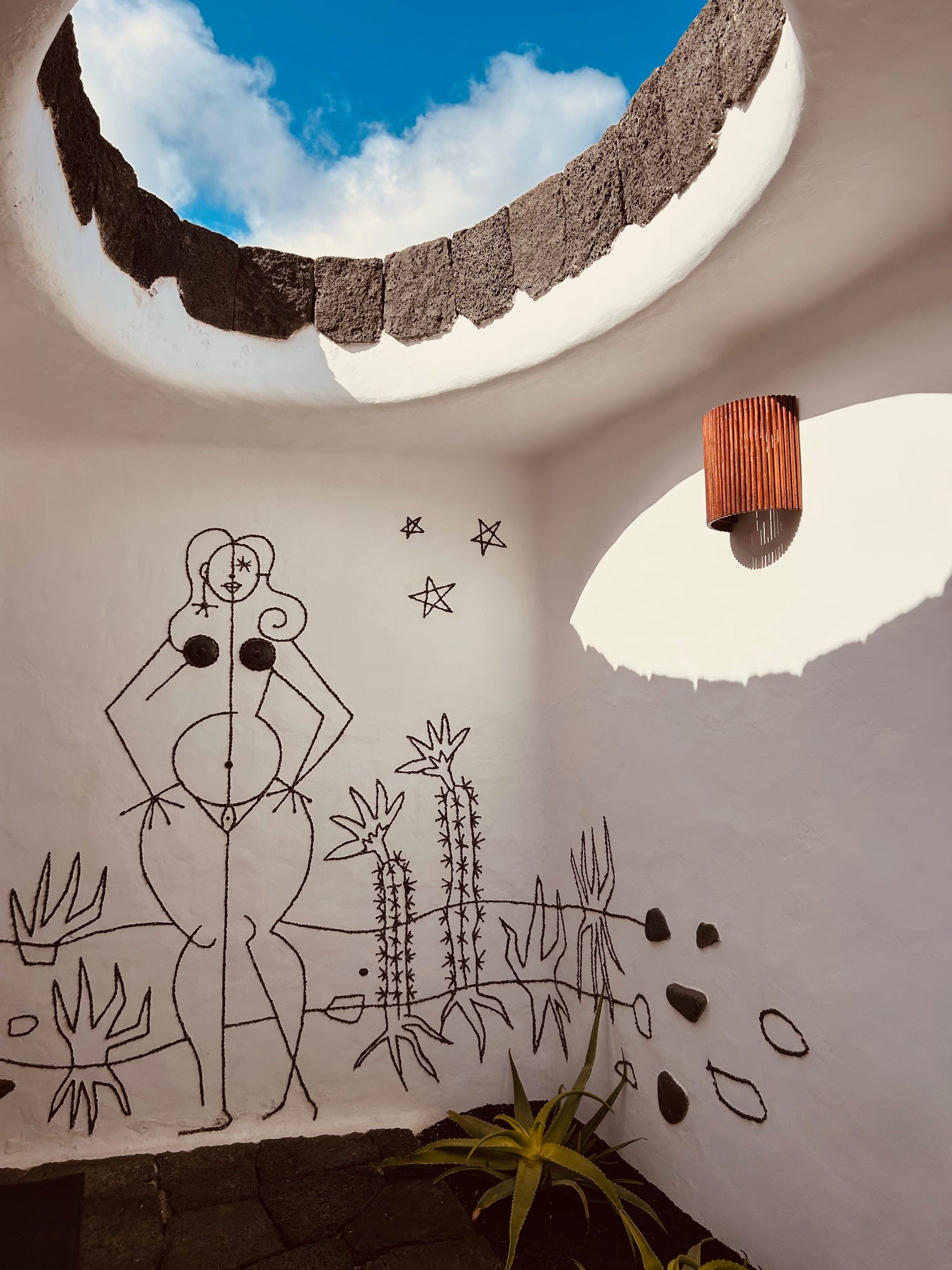
After just two years in New York he was longing for his native island and decided to move back home where he worked in conjunction with local officials and the tourism board on an ambitious endeavor to preserve and promote the natural beauty of Lanzarote through a series of artistic projects that Manrique called “Art-Nature.” In my opinion you can’t say you’ve “done” Lanzarote without visiting all of these artistic marvels, each one impressive and imaginative. While on the island we had some fairly windy days and chose to spend them doing the Manrique circuit and what I enjoyed maybe more than having my mind blown at every stop was that each location has a cafe, bar and/or restaurant so you can experience the space as if you lived in it. We had a coffee at Mirador del Río overlooking La Graciosa, lunch under the blue sky at Jameos del Agua, and a glass of wine pool side at Omar Sharif’s house, Lagomar. The only one of the seven Manrique sites we didn’t visit was El Diablo Restaurant located inside of Timanfaya park because we chose not to take the guided bus tour which is the only way to access Montañas del Fuego. It just isn’t our thing and while I’m sure it is stunning up close we found the drive on the two-lane highway through the park to be majestic with awesome views of the volcanoes… too each their own I suppose.


It is not hard to imagine what Lanzarote could have become without his influence, you need just look at some of other islands in the archipelago to see high-rise hotels, expansion and sprawl, all at nature’s expense. Through his creative vision and hard work he was able to protect the inherent beauty of the island and is considered to have been fundamental to the island’s existing image. His unexpected death in 1992 was mourned by locals but his memory is still ever-present on Lanzarote and his dedication to its protection and vision for its future continues to be upheld.
Other things on Lanzarote worth checking out:
